

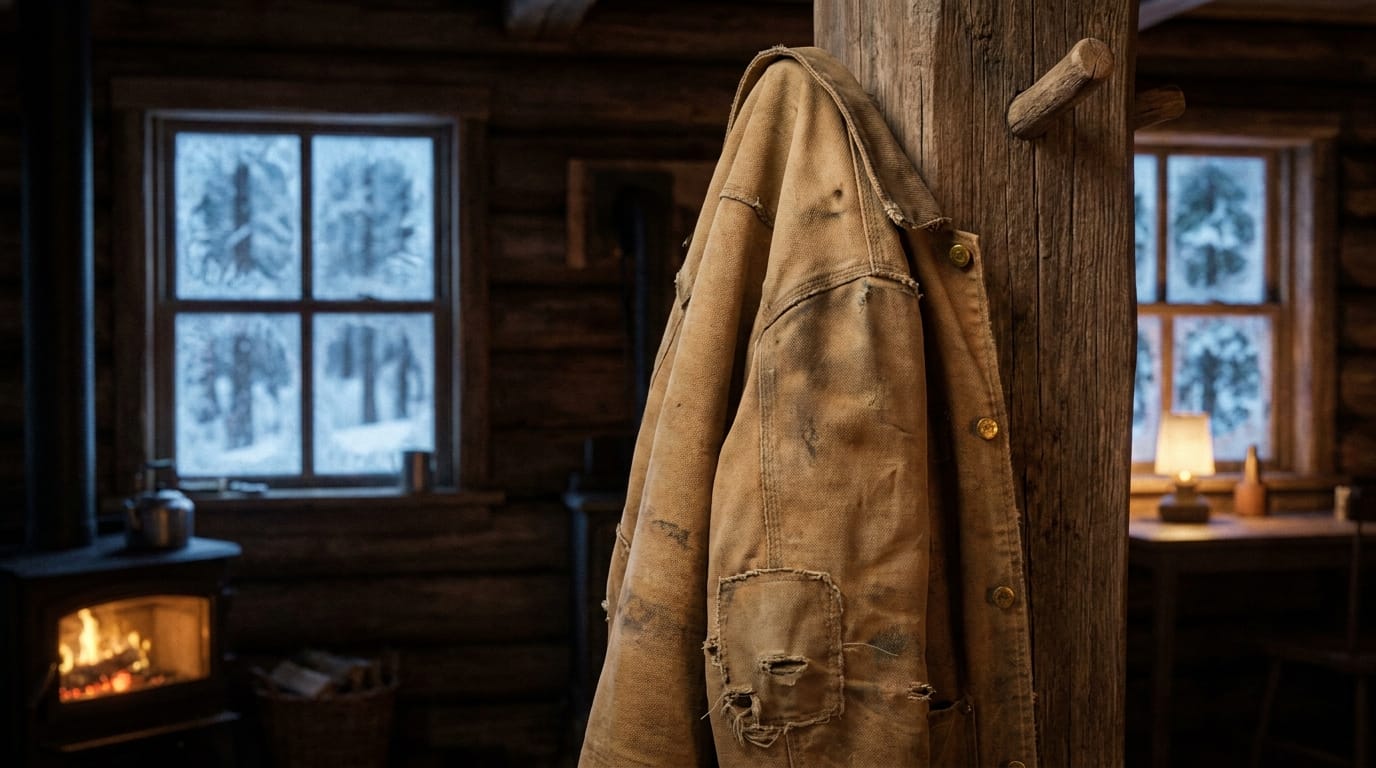
There's a particular kind of internet search that goes nowhere, and "Wind River Jeremy Renner jacket" is a perfect specimen of it. You watch the film, you notice that Cory Lambert spends the entire runtime in a beat-up brown coat that looks exactly like something a man who tracks mountain lions across frozen Wyoming would actually own, and you think, I want that. Then you go looking, and the internet hands you six different answers, all confident, none matching. A costume-spotting site says it's Carhartt. A dozen replica shops sell something that isn't quite the same coat. Nobody agrees, and the harder you look the blurrier it gets.
I've spent enough evenings inside this rabbit hole to map it properly, so this is the full version: why the jacket resists identification, what the wardrobe actually contains scene by scene, how the replica economy manufactured the confusion, what the best evidence says the coat really is, and how to end up with the look on your own shoulders instead of forty open tabs.
Why Wind River's Costume Design Fights Identification
The confusion isn't your fault, and it isn't random. It starts with a deliberate creative decision made before a single frame was shot.
Wind River is a film about grim, quiet competence in a brutal landscape, and the costume design followed that brief. Cory Lambert's outerwear was picked to look like genuine, unremarkable working gear, the opposite of a hero jacket engineered to sell merchandise. Think about what that means practically a costume built to read as "real ranch coat" is, almost by definition, a costume that resists branding, because real working coats don't announce themselves. There's no distinctive hardware to freeze-frame, no silhouette that exists in only one catalog, no logo moment. The wardrobe department succeeded so completely at authenticity that they accidentally created one of menswear's most un-Googleable jackets.
Compare that with the costumes people identify in an afternoon. A Bond suit, a McQueen-style racing jacket, a distinctive bomber from a blockbuster: those are designed or chosen partly as objects, with signatures a camera loves and a search engine can grip. Lambert's coat was chosen as camouflage for a character who works outdoors in Wyoming. Camouflage is exactly what it turned out to be.
The Wardrobe Problem: You're Not All Looking at the Same Jacket
The second layer of confusion lives inside the film itself, and almost nobody hunting the jacket accounts for it.
Across the movie, Renner's character wears more than one outer layer. There's the heavier brown work jacket that dominates people's memory of the film. There's a hooded layer underneath in several sequences. There's white cold-weather gear for the snowmobile and tracking scenes. When people argue online about "the Wind River jacket," they are frequently describing different garments entirely: one person's mental image is the rugged canvas chore coat, another's is a smoother brown jacket from a different scene, a third is thinking of the whole layered silhouette rather than any single piece.
That's how a single "iconic jacket" fractures into six incompatible search results. Half the disagreement about this coat is two correct people describing two different scenes. If you're going to hunt it, the first step is deciding which layer you actually want, and for most people the answer is the brown work coat, the one that carries the film's whole visual identity, which is the one the rest of this article follows.
How the Replica Economy Manufactured the Confusion
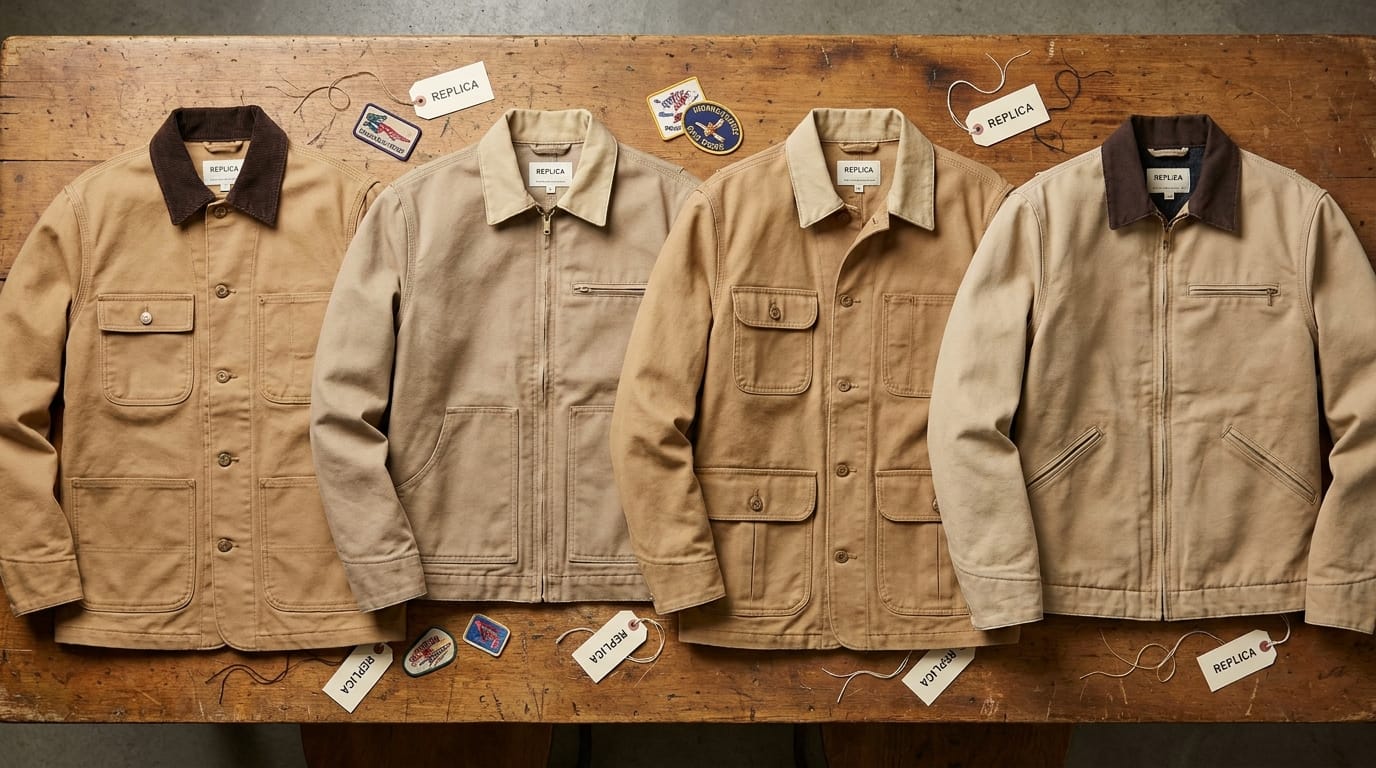
Now the biggest layer, the one that turned a tricky identification into an impossible one. Search the jacket today and most of your results aren't identifications at all. They're product pages from film-jacket replica sites, and once you can see the pattern, you can't unsee it.
The Same Jacket, Described Six Different Ways
Read a few of those replica listings side by side and something odd emerges: they describe subtly different coats. A cotton jacket with a shirt-style collar and buttoned front here. Different pockets and details there. Slightly different shades of brown across the set. Each is written in that unmistakable over-adjectived replica-site prose, and each presents itself as the definitive Wind River jacket. They cannot all be right, and in the meaningful sense none of them is, because none is identifying anything. Each shop looked at screenshots, built a plausible-looking coat, and optimized the page to rank for the search. The listings are answers-shaped, not answers.
Why the Shops Win the Search Anyway
The incentive structure explains the rest. A genuine costume identification is one page written once by a hobbyist. Replica products are dozens of pages, refreshed, interlinked, and commercially motivated, so they dominate the results for every phrasing of the question. The effect on you, the searcher, is a wall of near-matches that collectively bury the real answer, and the name they all use, the "Cory Lambert Jacket," compounds it: that product name exists because sellers coined it, not because any brand released a jacket by that name. When a dozen pages describe the same famous coat slightly differently and all want your money, you're not looking at an identification. You're looking at a marketplace wearing an identification's clothes.
What the Jacket Actually Is: The Best Evidence
So here's the straightest answer the evidence supports, stripped of retail fog.
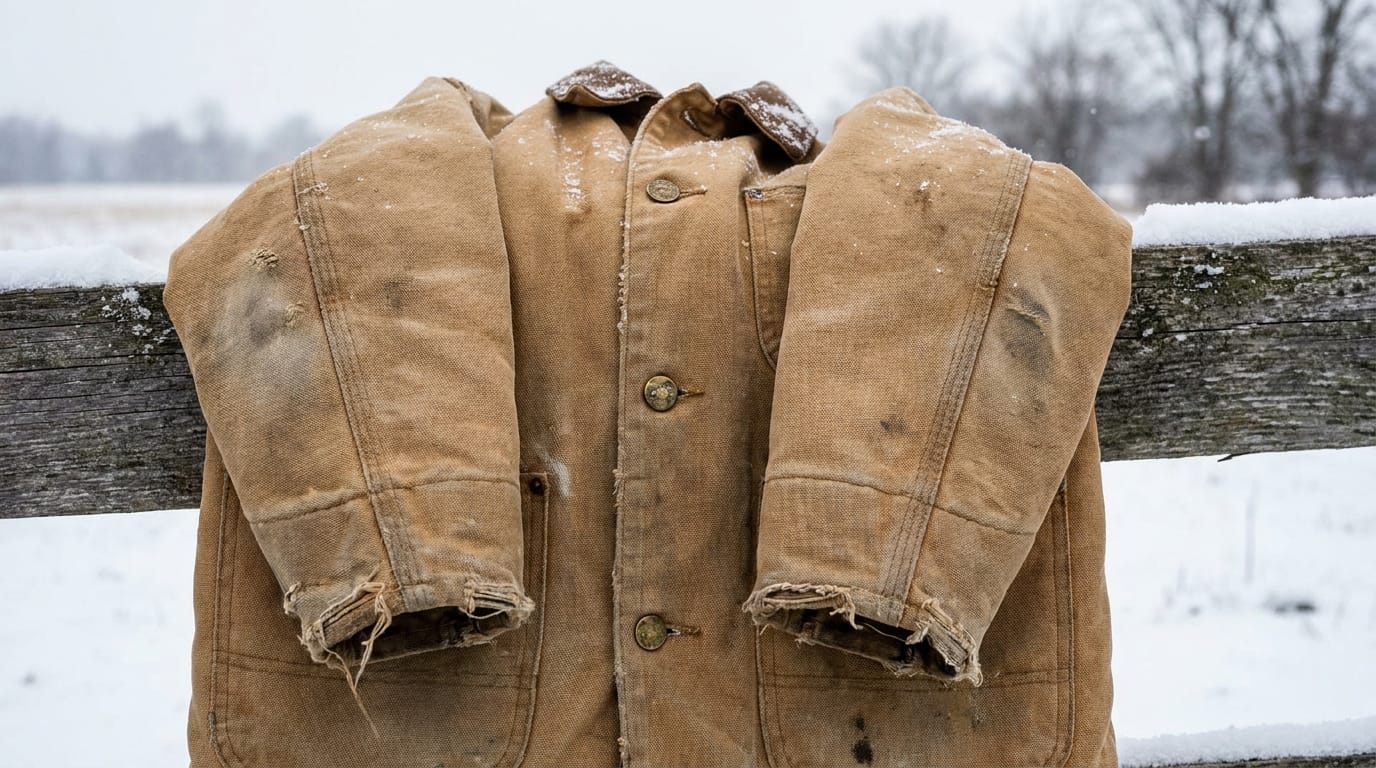
The most credible costume identification, from the spotting community that does this work seriously, points to a Carhartt chore coat, the brown canvas workwear staple, as the rugged work jacket Renner wears through much of the film. Everything about that ID fits. Carhartt is authentic American working outerwear, the default coat of ranchers, tradesmen, and outdoorsmen across exactly the country the film depicts. It's warm, unglamorous, built for abuse, and precisely what a real Fish and Wildlife tracker in Wyoming would own and wear until it fell apart. The film's costume logic and the identification agree completely: it was never a designer piece, and that is the entire point of it.
Which resolves the mystery in the least dramatic way possible. The exact-jacket hunt fails because the exact jacket was chosen for being ordinary, and the extraordinary thing was never the coat. It was the character wearing it, the landscape around it, and the way the film shot both.
Deconstructing the Look: What Actually Makes It Work
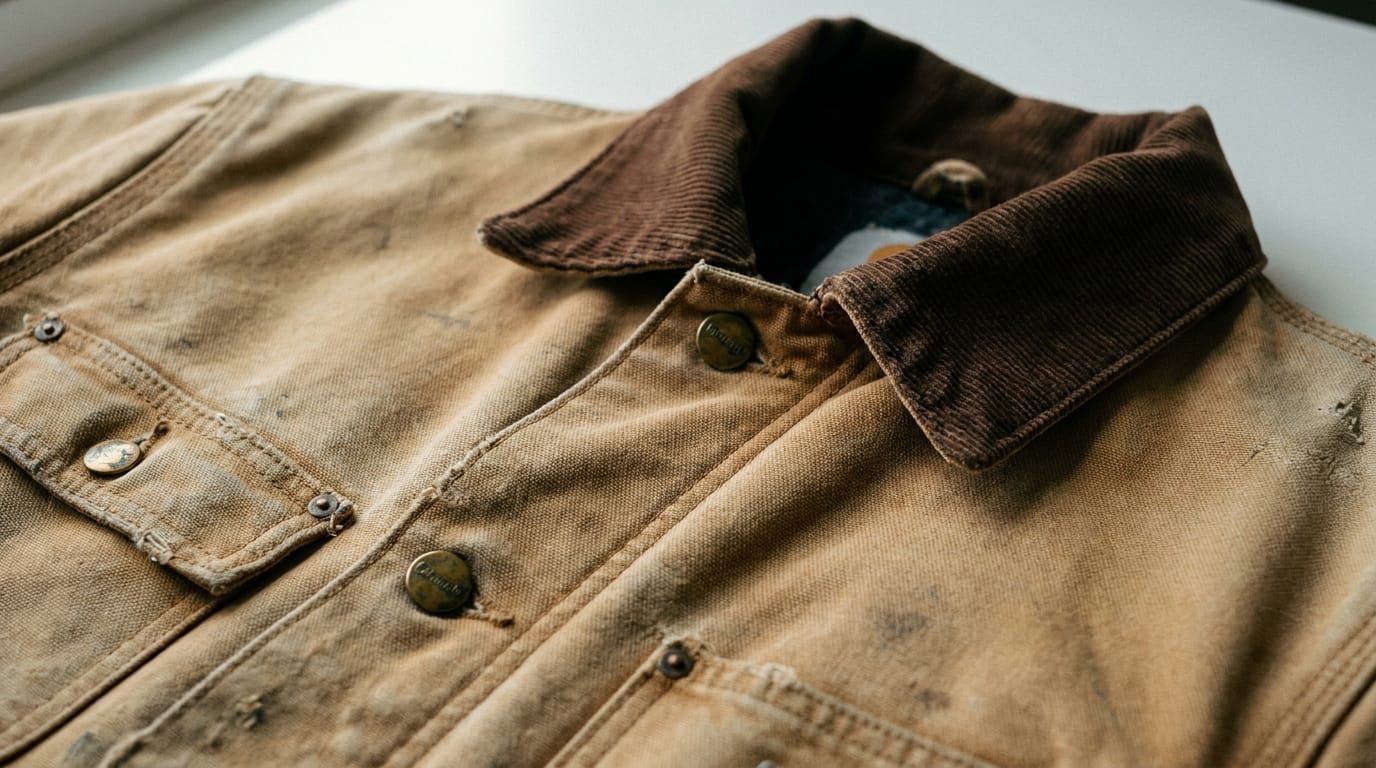
Once you stop chasing a label, you can do something more useful: name the qualities that make the Wind River look land, because those are what you're actually shopping for.
- An earthy, lived-in brown. Tan through deep chocolate, nothing bright, nothing fashion-forward. The color says outdoors, not outlet mall.
- A rugged, structured build that reads as genuinely protective rather than decorative, with a substantial collar you can turn up against real weather.
- Function-first details. Usable pockets, honest hardware, a cut made for movement and layering. Every feature on the coat looks like it earns its place, because on the original, everything did.
- A material with weight and character, the kind that looks better scuffed than pristine. Half the coat's screen presence is that it looks already-lived-in, and that only works with materials that age visibly and well.
Notice what's absent from the list: any brand, any logo, any specific model. The look is a set of qualities, which means it's available at every price point and in more than one material, and that's where your actual decision lives.
The Two Ways to Get It: Literal Workwear or the Leather Version
The Literal Route
If you want the closest thing to the on-screen piece, buy actual workwear, and a genuine Carhartt chore coat gets you nearest to the literal coat. It'll cost workwear money, take a season or two to break in properly, and look more correct with every scuff. The honest trade-off: it's a work coat, and it reads as one, which is perfect for the full outdoor look and limiting everywhere else.
The Elevated Route
Here's the thing a lot of people discover mid-search: what they actually want isn't the literal canvas coat, it's the impression it makes, that rugged, weathered, quietly capable presence, in a version that fits more of their life. That's where leather earns its place in this story. A well-made brown leather jacket delivers the same tough silhouette and earthy palette the costume was built on, with a richness and presence canvas can't match, and it wears into character the same way, looking better at year three than day one.
If that's your direction, the smart move is browsing a proper men's leather jackets collection with the four qualities above as your checklist, rather than hunting a screenshot, because the goal is the impression, not the imitation. And for the closest spirit to Cory Lambert's coat specifically, a rugged brown piece like the Men's Oscar Piel Leather Jacket captures the earthy, hard-wearing feel the film's costume was reaching for, in a genuine-leather build made to age the way the look demands. Buy for the four qualities and the material you'll actually wear, and you've solved the problem the search engine couldn't.
How to Wear It Without Looking Like a Costume
One last practical layer, because the difference between "great jacket" and "cosplaying a film" is styling, and it's a short list. Keep everything around the jacket plain: dark jeans or canvas trousers, simple layers underneath, a henley or flannel rather than anything loud, and boots with some wear on them. Let the coat be the most interesting thing you're wearing. Resist the urge to complete the set, no matching hat-and-gaiter recreation, because the whole appeal of the Lambert look is that it reads as a man dressed for his life, not a fan dressed as a character. And whichever material you chose, wear it hard and skip the babying, since this is one of the rare aesthetics where scuffs are a feature. The coat on screen worked because it had clearly been somewhere. Yours should get the same privilege.