

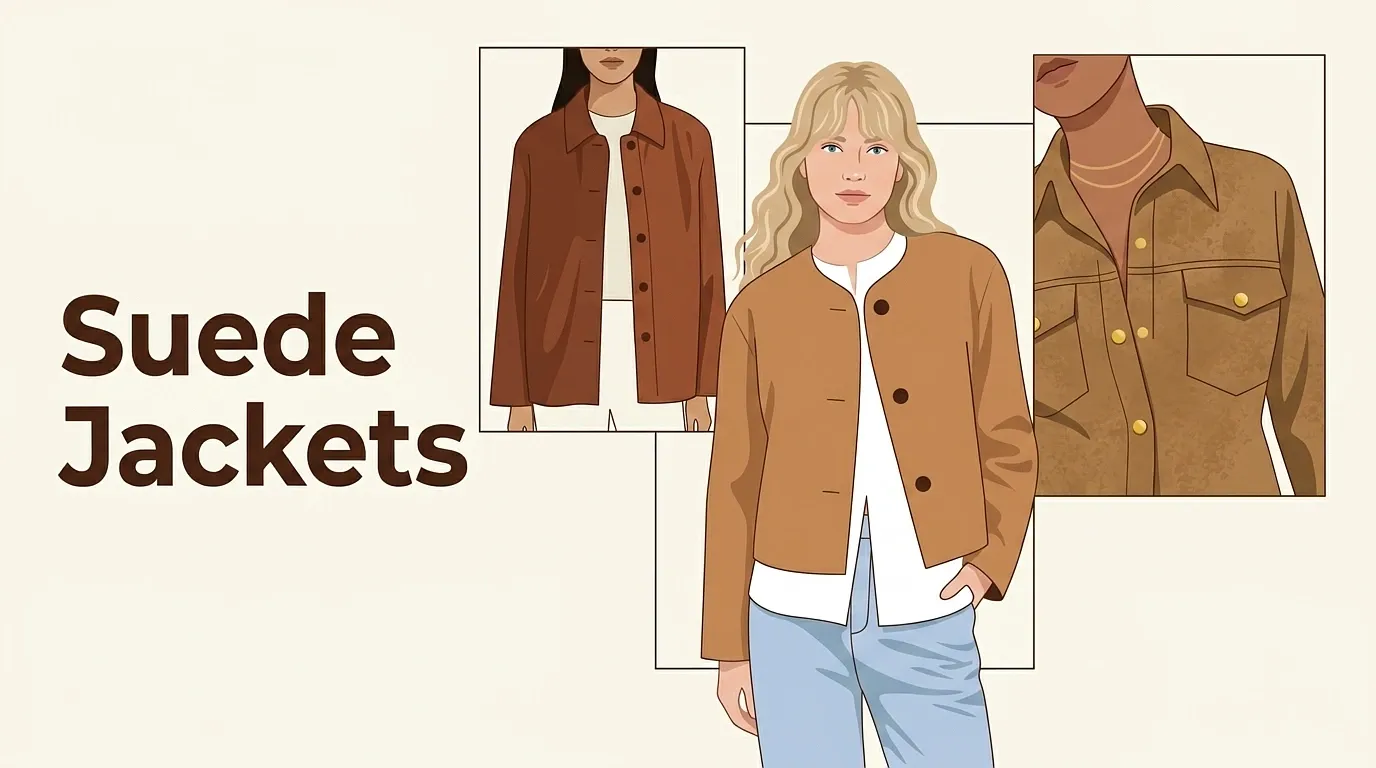
Suede is a weird material. It should feel soft and money thin like you'd expect upon entering a Range Rover in the Cotswolds. But most womens jackets who invest in a suede jacket end up looking like they took it at a service station in 2009. The fabric isn't the issue. The carrying out is invariably the.
Essential Suede Care Tips
Because suede is a porous, napped leather, it requires intentional care to maintain its luxury texture:
- Water Protection: Always apply a specialized suede protector spray before the first wear to guard against moisture and light rain stains.
- Stain Removal: Use a dedicated suede eraser to gently rub away dry scuffs, and follow up with a suede brush to restore the natural nap.
- Storage: Always hang your jacket on a wide, padded hanger in a cool, dry closet. Avoid plastic garment bags which trap moisture.
The Cut Fights the Fabric
Suede weighs a lot. It feels and looks weighty, and unlike polished leather, it absorbs light instead of reflecting it. This is crucial since every cut that works well on a smooth leather motorcycle jacket doesn't work well on suede.
Short cropped silhouettes are the worst offenders. They make it extremely clear that they are dressed in costume by packing together at the waist and pushing the mass up into the shoulders. In the other approach, boxy bombers eliminate any waist and form while flattening the body into a rectangle. The cloth is just absorbing light rather than draping; nothing is occurring to it.
Length is what really works. Suede may fall appropriately if the jacket touches at the hip or just below. The material's weight turns into a benefit rather than a drawback; it skims the body, maintains a line, and seems intentional rather than accidental.
Faux Suede Always Tells On Itself
When you see cheap suede from across the room, it's usually because it's not suede at all. Real suede only lacks the subtle plasticky gloss that microsuede and polyester-blend variants exhibit under interior illumination. Rather of being rubbed in, the nap seems painted on. The drape has creases that crush flat and remain crushed, and it is excessively light and floppy.
The gritty, almost dusty surface of real suede absorbs light unevenly across the nap. The color changes as you run your palm over it. The tell is that. Genuine hide is never consistent, although bonded suede (shredded leftovers stitched together) and the less expensive microfibre variants are. The way an animal moves reveals even poorly made genuine suede thin, papery skins from the incorrect area of the animal. The jacket will seem weightless on you if it feels weightless on the hanger.
The Wrong Colour Drains the Whole Outfit
The default is tan suede, which is causing more harm than almost any other component in this situation. Warm brown, beige, and light camel are tones that are a few shades distant from the majority of skin tones, thus they wash out rather than accentuate the face. The effect is more pronounced on women over 40 or 50, in part because warm earthy hues accentuate any sallowness in the face.
The behavior of darker hues is very different. Deep chocolate, charcoal, oxblood, navy, and black all provide contrast with the skin and the rest of the ensemble, and contrast is what makes an item seem pricey. Nearly always, a jewel-tone suede in burgundy or forest green will function better than a tan suede at three times the cost.
Proportion Breaks Everything Quietly
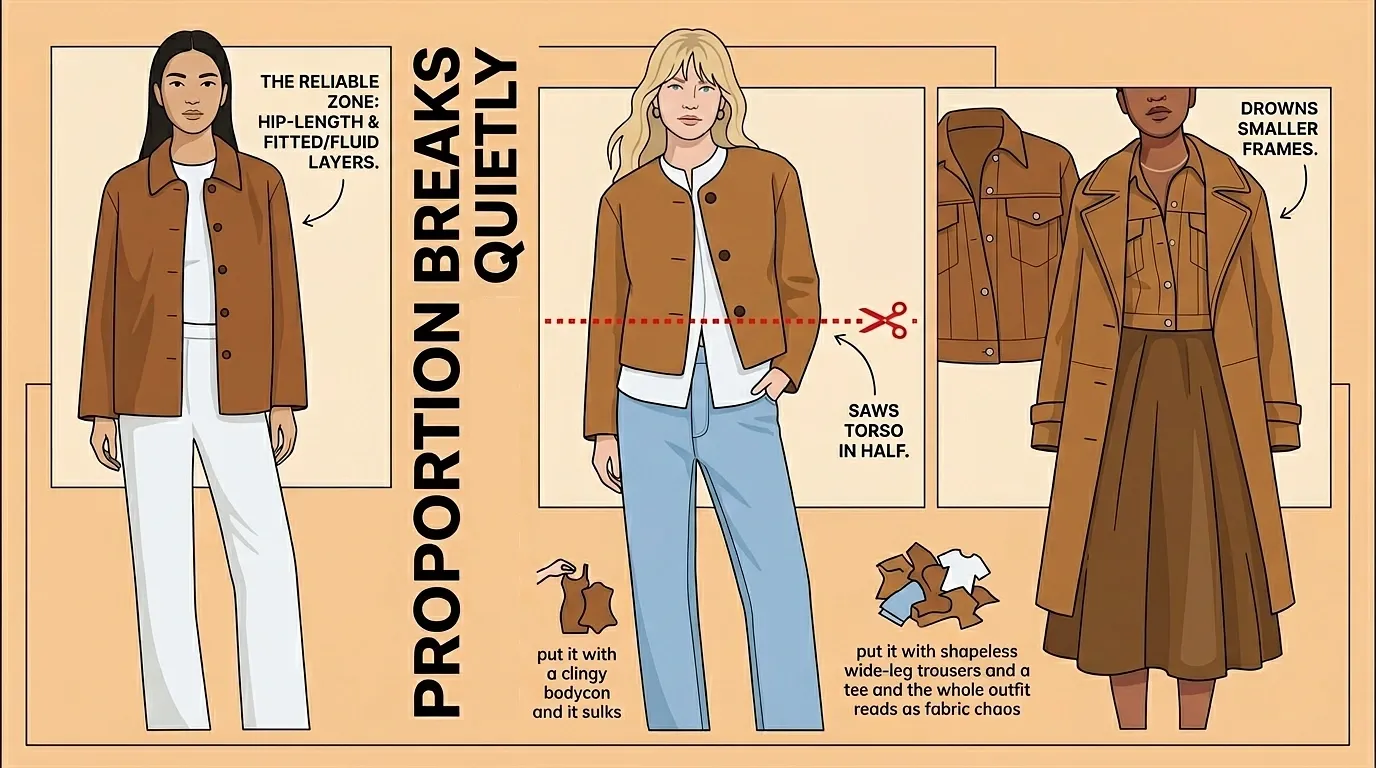
The jacket itself may seem good, making this one more difficult to spot. The issue only becomes apparent when the whole ensemble is put together. The torso seems to be cut in half while wearing cropped suede over straight pants. Smaller frames are completely drowned by long suede over a midi skirt. The whole outfit's silhouette is dictated by the jacket, and if the other pieces aren't adjusted to complement it, the ensemble falls apart.
The remainder of the ensemble may be fitted beneath, fluid below, or vice versa, with the dependable zone being hip-length or slightly below. Suede needs something to respond to. It sulks when you put it with a clinging bodycon. When paired with a loose t-shirt and shapeless wide-leg pants, the whole ensemble looks like fabric anarchy.
Styling Pulls It Down to the Lowest Common Denominator
A suede jacket borrows from whatever's around it. Pair it with a graphic tee, distressed boyfriend jeans, and chunky trainers and the suede stops looking like a luxury piece and starts looking like the most expensive thing at a flea market. The fabric is too rich to share an outfit with anything that casual.
The partners that make suede work are silk, fine knit, fitted wool, and a tidy white shirt with structure. Good style is shown by the contrast between the sharp poplin collar and the soft nap. Instead of partners that pull the cloth down, it requires mates who match its register.
Hardware matters here too. Cheap suede jackets are usually loaded with hardware to compensate too many zips, fringe panels, snap-buttons in shiny gold-tone, metal studs around the lapels. The more decoration on a orvis addison jacket, the cheaper it almost always looks. Real expense reads as restraint. One clean zip, matte hardware, no contrast stitching. That's it.
Care Failure Shows Faster on Suede Than Almost Any Other Fabric
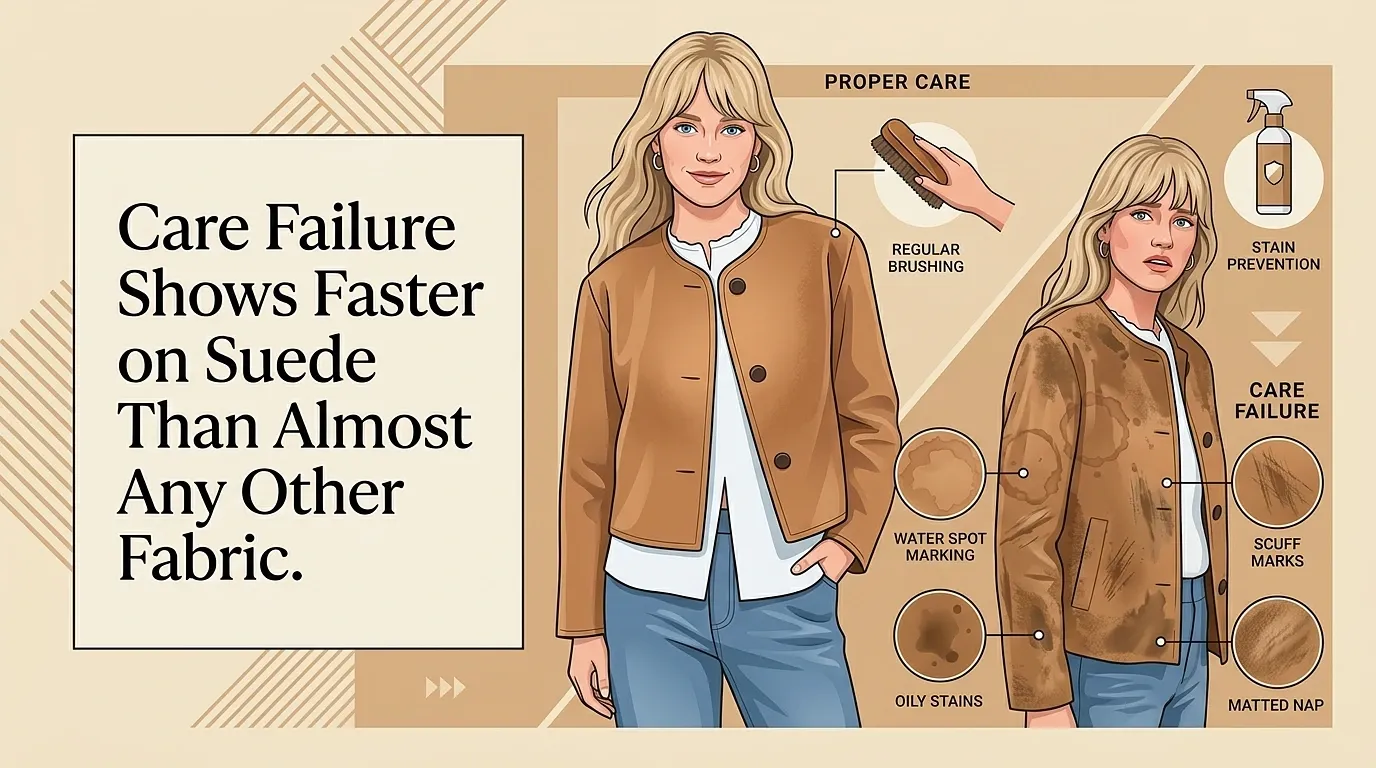
It's the quiet murderer. Water stains, skin oils, dust, lint, and the odor of the room it was in the previous week are all absorbed by suede. If a jacket isn't maintained, it may go from looking acceptable to shabby in only one season. matted nap, dull areas on the shoulders, and subtle ring lines where the hairline meets the collar. By itself, none of this is spectacular. When taken as a whole, the jacket seems worn out and cheap even if it isn't.
The majority of this may be resolved with a protective spray sprayed before to the first use and a suitable nubuck brush stored in the closet for monthly usage. The nap is restored, the dust is lifted, and the directional shine that gives suede a lively appearance rather than a flat one is restored by the brush.
How to Actually Buy and Wear a Suede Jacket That Looks Expensive
Don't even look at the tan microsuede racks. Look for real suede or, if money is tight, a thicker microfibre with a matte finish and actual structural weight. Feel it by picking it up. Leave if it doesn't weigh anything.
Don't follow your gut and go darker. Almost everyone is flattered by hues like chocolate, charcoal, navy, and oxblood, which also age nicely as the suede burnishes and softens.
Maintain a simple design. Very little hardware no studs, fringe, or contrast piping. a length that stops just below the hip. Custom shoulders that scream 1987 and maintain their form without padding.
Construct the remainder of the ensemble at the same level. A silk shirt, elegant merino, and fitted pants made of a drapery fabric. shoes with some structure, such as a low heel, a tidy ankle boot, or a sleek loafer. Don't wear the sneakers unless they are really white and minimalist.
And keep it up. Before the first wear, mist it, brush it after a few wears, and, if at all possible, keep it out of the rain. More than any other fabric, suede rewards attention and penalizes disregard as swiftly.
The issue isn't with the jacket. These are the options around the jacket. When you get things right, suede ceases to seem like a cheap buy and begins to fulfill its intended purpose, making the rest of the ensemble appear more costly than it really is.